
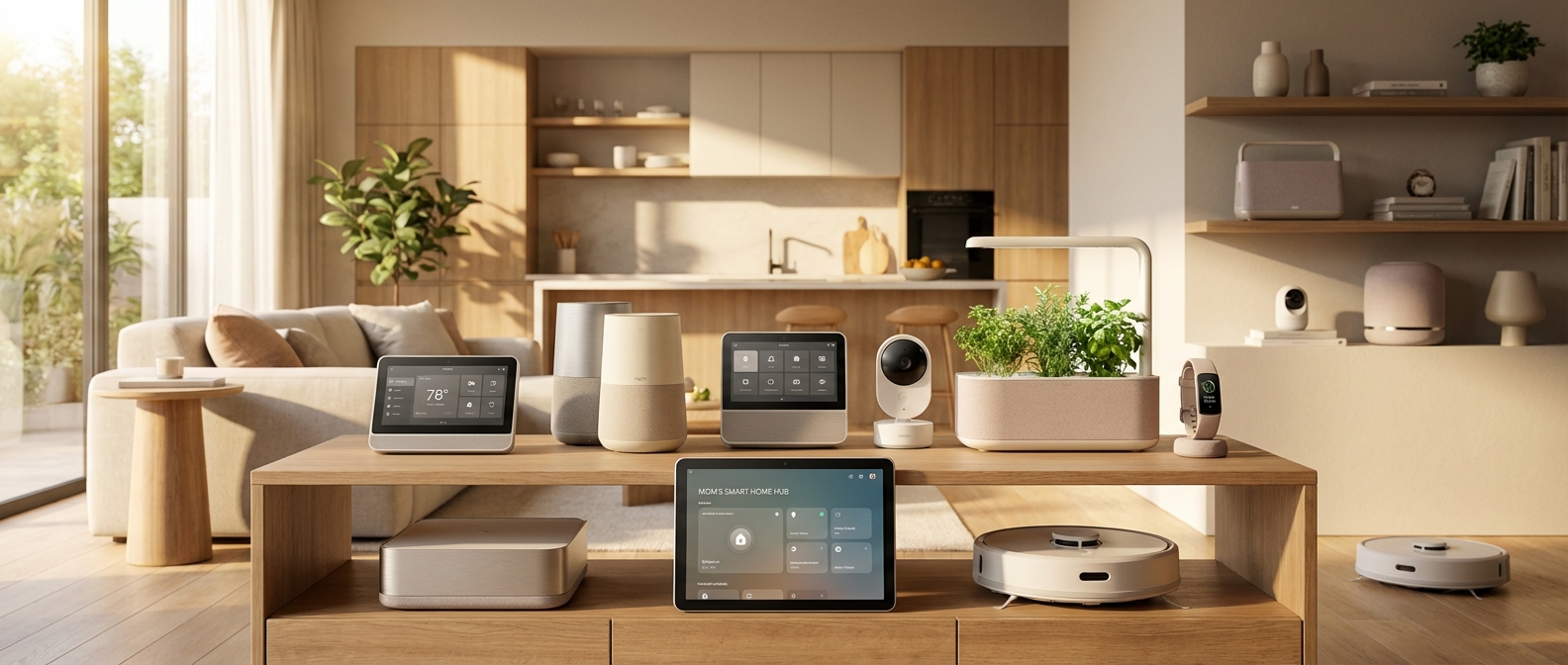
Introduction: Why 2026 is the Year of the 'Intuitive' Smart Home
Introduction: Why 2026 is the Year of the "Intuitive" Smart Home
2026 marks the pivotal shift from reactive, command-based gadgets to Invisible AI that anticipates family needs. This year's technology utilizes local processing and predictive sensors to manage household environments without requiring voice commands or app inputs. For mothers, this evolution directly targets the mental load, offering automation that safeguards sleep and sanity rather than just adding digital clutter.
The Death of the Gimmick
Motherhood is rarely physically easy, but the true exhaustion often stems from the mental load—the invisible, never-ending checklist of scheduling, monitoring, and anticipating the needs of others. In the early 2020s, the "smart home" promised relief but often delivered administrative burdens. We spent more time troubleshooting connectivity or shouting at speakers than we saved in actual labor.
That era is effectively over. Smart home trends 2026 are defined by silence and anticipation. We have moved beyond the novelty phase where a connected toaster was impressive. The focus of parenting technology has shifted entirely to utility and intuition.
Invisible AI: Anticipation Over Reaction
The devices listed in this guide utilize "Invisible AI." This technology does not wait for you to ask it to do something; it learns your family's rhythm and acts accordingly. It is the difference between asking a thermostat to lower the temperature and the thermostat lowering itself because it detects deep sleep patterns in the nursery.
If you are ready to configure your home to work for you, our guide on 21 Best Smart Home Routines for Moms in 2026 provides a blueprint for setting up these predictive behaviors.
The following table outlines the fundamental shift in automation for moms we are witnessing this year:
| Feature | The "Smart" Home (2020-2024) | The "Intuitive" Home (2026) |
|---|---|---|
| Trigger | Voice command or App tap | Presence, biometrics, and time of day |
| Data Processing | Cloud-based (Slow, privacy risks) | Edge AI (Instant, local privacy) |
| Maintenance | Frequent updates & troubleshooting | Self-healing networks (Matter 2.0) |
| Primary Benefit | Novelty & Remote Control | Mental Load Reduction |
ROI: Return on Sanity
The releases selected for this list were not chosen for their aesthetic appeal or marketing hype. They were selected based on ROI. In the context of 2026 motherhood, ROI does not measure financial gain; it measures minutes of sleep reclaimed, tantrums prevented, and the quiet peace of mind knowing your home is secure.
Whether you are looking for smart home safety for kids or energy management, the criterion is simple: Does this device make a mother's life easier without requiring her supervision? If the answer is yes, it belongs in your home.
The AI Command Centers: Managing the Family Chaos
The AI Command Centers: Managing the Family Chaos
Smart displays in 2026 have evolved from passive speakers into proactive family operation centers powered by generative AI, effectively serving as a digital second parent. These devices no longer wait for specific commands; they anticipate needs by analyzing school calendars, work schedules, and traffic data to resolve conflicts before they happen. They don't just display information—they actively manage the logistics of household life.
From Smart Speakers to Proactive Partners
The shift this year is driven by the integration of Generative AI directly into local hardware. In the past, you had to manually input every soccer practice. Now, an AI family organizer embedded in your wall panel scrapes the team newsletter, populates the calendar, and flags that you need to leave work 15 minutes early next Tuesday due to roadwork.
This capability transforms how we interact with smart displays 2026. You can now issue complex, natural language requests like, "Sarah is sick; clear her afternoon and move dinner to 6 PM." The system automatically texts the piano teacher, adjusts the thermostat for comfort, and reschedules the smart oven preheat time.
For those still navigating the ecosystem wars, choosing the right underlying intelligence is crucial. We break down the nuances in our guide to Alexa vs. Google Home for Families (2026).
Top 2026 Smart Hubs for Family Management
The hardware landscape has shifted toward larger, communal screens that act as digital whiteboards. Below is a comparison of the top releases this year designed specifically for parental sanity.
| Device Model | key AI Feature | Best For | Est. Price |
|---|---|---|---|
| Echo Show 18 (Gen 3) | Visual ID + Context: Recognizes who is looking and highlights their specific chores and appointments. | Large families needing visual task tracking. | $349 |
| Google Nest Hub Ultra | Gemini Family Flow: Proactively suggests schedule fixes based on Gmail and school portal data. | Android-heavy households using Google Workspace. | $299 |
| Apple HomeBase | Siri Intelligence: Local processing for total privacy; deeply integrates with Apple Health for kids' sleep data. | Privacy-focused families deep in the Apple ecosystem. | $399 |
| Samsung SmartThings Station Pro | Matter AI: Acts as a universal translator for disparate devices, optimizing energy usage automatically. | Tech-savvy moms mixing different brands. | $199 |
Unifying the Fragmented Schedule
The most significant software breakthrough in 2026 is the consolidation of family scheduling apps. Previously, moms juggled a co-parenting app, a school portal, and a work calendar. New hubs act as a unified layer on top of these.
They visualize the day's flow on a shared screen, often placed in the kitchen or mudroom. When you walk by, the screen shifts from art mode to a "Morning Momentum" view, listing only what is critical for the next hour. This reduces cognitive load significantly. To see which hardware handles this best, review The Smart Mom’s Guide: Best Smart Home Hubs Compared (2026 Review).
These command centers also tie into broader automation. When the hub sees "Movie Night" on the schedule, it doesn't just remind you; it dims the lights and locks the doors. For more on setting up these automated flows, check out our article on 21 Best Smart Home Routines for Moms in 2026.
Generative AI Assistants: Beyond 'Set a Timer'
Generative AI Assistants: Beyond "Set a Timer"
The era of shouting at a smart speaker to simply play music is over. In 2026, the integration of Large Language Models (LLMs) has transformed voice assistants from reactive command-takers into proactive family concierges. These contextual voice assistants now understand nuance, memory, and complex multi-step instructions, effectively acting as a second brain for the household manager.
The Shift to "LLM for Home"
Previous generations of smart speakers operated on rigid scripts. If you didn't say the magic phrase, the device failed. The LLM for home revolution changes this dynamic entirely.
Now, you can speak naturally. The AI understands context from previous conversations and visual data from connected sensors. For a busy mother, this translates to a massive reduction in mental load. The assistant doesn't just execute a task; it anticipates the logistical domino effect of that task.
Top 2026 Capabilities for Moms:
- The "Inbox Zero" Assistant: Connect your assistant to your email. You can now say, "Summarize the email from Mrs. Henderson regarding the field trip, add the permission slip deadline to my calendar, and remind me to buy a packed lunch the day before." It handles the reading, scheduling, and reminding in one breath.
- Visual Meal Planning: Using cameras inside smart fridges or a quick photo you snap of your pantry, the assistant generates a meal plan. Ask, "What can I cook for dinner that takes under 20 minutes, uses the chicken in the fridge, and is safe for a toddler with a nut allergy?" The AI cross-references inventory with dietary restrictions and generates a recipe instantly.
- Routine Arbitration: The AI can now resolve conflicting schedules. If you attempt to set a dentist appointment during soccer practice, the assistant flags the conflict immediately and suggests three alternative slots based on traffic patterns.
Comparing the Big Three in 2026
Choosing an ecosystem matters more than ever. While features overlap, the strengths of Amazon, Google, and Apple have diverged significantly this year.
| Ecosystem | AI Engine | Best For... | key 2026 Feature |
|---|---|---|---|
| Amazon Alexa | Alexa LLM (Plus) | Shopping & Logistics | Predictive ordering. It notices you are buying diapers more frequently and adjusts subscription cadence automatically. |
| Google Home | Gemini Ultra | Information & Education | Best-in-class homework help. It can guide a child through math problems step-by-step without giving the answer. |
| Apple Home | Apple Intelligence | Privacy & Health | On-device processing. It analyzes health data from wearables to adjust smart home temperature and lighting for better sleep. |
For a deeper dive into which ecosystem suits your specific household dynamics, read our detailed comparison: Alexa vs. Google Home for Families (2026): The Ultimate Mom-Tested Battle.
The "Invisible Village" Effect
The true power of these 2026 updates lies in their ability to retain context. You no longer have to explain the family dynamic every time you make a request.
If you tell your assistant, "The baby is sleeping," it doesn't just whisper. It automatically pauses the robot vacuum, changes the doorbell to "silent mode," and dims the nursery lights. This level of automation creates an Invisible Village that supports your daily parenting efforts without requiring constant micromanagement. The technology has finally caught up to the complexity of motherhood.
Smart Wall Displays: The New Family Calendar
Smart Wall Displays: The New Family Calendar
The era of cluttered refrigerator doors and lost permission slips is officially over. In 2026, the digital family calendar has graduated from a niche gadget to an essential household appliance. These large-format, touch-interactive panels serve as the central nervous system of the home, replacing chaotic paper systems with a unified, self-updating command center.
A smart wall hub does more than just display dates; it aggregates the mental load of motherhood into a single, sleek 24-inch (or larger) interface. By syncing with every family member’s smartphone, these displays visualize real-time locations, chore completion status, and meal plans without requiring you to open an app.
Top 2026 Smart Displays Compared
The market has shifted toward larger, "furniture-grade" screens that blend into home decor. Here is how the top contenders stack up this year:
| Device Model | Screen Size | Standout Feature | Ecosystem | Est. Price |
|---|---|---|---|---|
| Echo Show 21 | 21-inch FHD | Visual ID (Adjusts view based on who is looking) | Alexa | $449 |
| Samsung Infinity Board | 27-inch Matte | AI Meal Planning & Fridge Inventory Sync | SmartThings | $699 |
| Skylight Cal Max 2 | 24-inch Anti-Glare | Distraction-Free (No video/browser access) | Independent | $399 |
| Apple HomePad XL | 20-inch Retina | StandBy Mode & Family Apple Watch Integration | HomeKit | $599 |
key Features for Family Management
Modern displays have evolved beyond simple scheduling. The latest software updates released in late 2025 have introduced features specifically designed to reduce parental anxiety and streamline operations.
- Real-Time Location Maps: Instead of texting "Where are you?" to your teenager, a quick glance at the wall shows their avatar moving from school to soccer practice. This visual confirmation provides peace of mind without the friction of constant check-ins.
- Gamified Chore Charts: Chores are no longer a battle of nagging. Kids tap their profile on the wall to mark tasks as complete, triggering animations or unlocking screen time privileges automatically. For help setting this up, refer to our guide on the 21 Best Smart Home Routines for Moms in 2026.
- AI-Assisted Scheduling: The new generation of calendars detects conflicts before they happen. If you schedule a dentist appointment during a soccer game, the smart wall hub highlights the clash immediately and suggests an alternative slot based on traffic data.
Integration is Key
To get the most out of these displays, they must talk to your other devices. A Samsung board works best if you are already in the SmartThings ecosystem, while the Echo Show 21 dominates if you rely on Alexa for voice commands.
Before drilling holes in your drywall, ensure the display you choose is compatible with your existing sensors and assistants. You can verify your current setup compatibility in our review of the Best Smart Home Hubs Compared (2026 Review).
By centralizing information on a vertical surface in a high-traffic area—typically the kitchen or mudroom—you democratize family organization. It stops being "Mom's job" to know everything and becomes shared family knowledge.
Next-Gen Nursery & Child Safety Tech
Next-Gen Nursery & Child Safety Tech
The defining shift for the smart nursery 2026 landscape is the total abandonment of intrusive wearables in favor of ambient, "invisible" intelligence. Parents no longer need to strap sensors onto sensitive skin or worry about charging smart socks; new biometrics utilize mmWave radar and Lidar to detect heart rates and breathing patterns through heavy swaddles with medical-grade precision. This is protection without the pestering.
The latest baby tech releases focus on predictive care rather than reactive panic. Instead of merely alerting you when a baby cries, these AI-driven systems analyze sleep architecture to predict wake windows before they happen. This allows you to adjust the room climate or prepare a feed proactively.
Contactless Monitoring vs. Traditional Wearables
| Feature | Traditional Wearables (Pre-2025) | 2026 Contactless Biometrics |
|---|---|---|
| Sensing Method | Physical skin contact (socks/bands) | mmWave Radar & AI Computer Vision |
| Disruption | High (requires charging, washing, fitting) | Zero (wall or stand mounted) |
| Data Depth | Heart rate & O2 levels | Vitals + Sleep Depth + Pain Expression Analysis |
| Range | Limited by Bluetooth base station | Whole-room volumetric coverage |
As your infant becomes mobile, the technology pivots from vital tracking to behavioral safety. Advanced child safety monitoring systems now integrate directly with your home's neural network to create virtual "safe zones." If a toddler approaches a designated "danger zone"—like a medicine cabinet or an open window—the system allows you to intervene immediately.
- Predictive Environmental Control: Systems now sync with HVAC to adjust humidity if a baby’s breathing indicates congestion. For optimal sleep environments, proper illumination is critical; consult our guide on Best Smart Lighting for Nursery (2026) to configure the perfect circadian rhythm setup.
- Behavioral AI: Cameras can now differentiate between "playful" screaming and "distress" crying, filtering out false alarms that usually spike maternal cortisol levels.
- Thermal Mapping: New monitors use thermal overlays to check if the baby is overheating without you needing to enter the room and risk waking them.
For parents managing the transition from crib to bed, these non-invasive tools are essential. You can find more specific gear recommendations in our breakdown of the 17 Best Smart Home Devices for Toddlers in 2026.
Contactless Biometric Health Monitoring
Contactless Biometric Health Monitoring
2026 marks the end of the "wearable war" in the nursery. You no longer need to wrestle a squirming infant into a smart sock or panic when a battery-powered band slips off at 3 AM. The latest generation of nursery tech utilizes millimeter-wave technology to track vitals without touching the baby. A radar baby monitor now sits on the shelf, detecting micro-movements—specifically the rise and fall of a chest—from up to ten feet away. These sensors possess the sensitivity to track heart rate and respiration patterns through heavy swaddles and sleep sacks with near-medical accuracy.
The hardware is impressive, but the software is what truly reclaims your sanity. New processors handle AI cry analysis directly on the device to interpret the intent behind the noise. Instead of a generic "sound detected" alert, your phone notifies you specifically: "Hunger Cry detected" or "Discomfort Cry detected." This distinction allows you to prepare a bottle before you even enter the room or grab the thermometer immediately, streamlining your response time.
Key Benefits of 2026 Contactless Monitoring:
- Zero Interference: No electronics touch the baby’s skin, eliminating the risk of irritation or Bluetooth signals directly on the body.
- Through-Object Detection: Radar waves penetrate crib bars and blankets, meaning the camera doesn't need a perfect line of sight to track breathing.
- Predictive Sleep Tracking: By analyzing toss-and-turn patterns combined with biometric data, these systems predict wake windows more accurately than previous algorithms.
| Feature | Traditional Smart Socks (2020-2024) | Contactless Radar Monitors (2026) |
|---|---|---|
| Physical Contact | Required (Sock/Band) | None (Remote Sensing) |
| Power Source | Battery (Requires daily charging) | Wall Outlet (Always on) |
| False Alarms | High (caused by slipping off) | Low (wide field of view) |
| Data Metrics | Pulse, O2, Movement | Breath Rate, Heart Rate, Sleep Stages, Presence |
| Setup Time | High (fitting the wearable) | Instant (plug and play) |
Integration is the final piece of the puzzle. These monitors now communicate with other devices to automate your response. If the system detects the baby stirring, it can trigger your smart lights to fade in gradually rather than turning on abruptly. For more details on integrating these systems into a broader security setup, check our Smart Home Safety for Kids: The Ultimate Protection Guide (2026).
Smart Locks & Geofencing for Toddlers
Smart Locks & Geofencing for Toddlers
Smart cabinet locks and advanced geofencing sensors represent the 2026 standard for childproofing, allowing parents to secure hazardous zones without fumbling for magnetic keys or plastic latches. These systems integrate directly with your home hub, utilizing biometric authentication and spatial awareness to keep curious toddlers safe while granting adults effortless access.
Biometric Cabinet Security
Traditional childproofing often frustrates parents as much as it protects children. The latest smart cabinet locks solve this by remaining invisible from the exterior and operating via capacitive touch or voice commands.
Imagine your hands are covered in flour while baking. Instead of hunting for a magnetic key to access the spice rack, you simply use a voice command or tap a discreet fingerprint sensor hidden on the cabinet's edge. 2026 models feature "Dual-Verify" technology for high-risk areas—like medicine cabinets or cleaning supply storage—requiring both a voice code and a fingerprint to disengage. This ensures that even if your toddler mimics your voice, the cabinet remains sealed.
For a comprehensive look at other essential gadgets for your little ones, read our review of the 17 Best Smart Home Devices for Toddlers in 2026 (Safety & Sleep Guide).
Intelligent Geofencing and Sensors
Physical baby gates are effective, but they are also tripping hazards. New toddler safety sensors use volumetric scanning to create virtual "safe zones" within your home.
Unlike old contact sensors that only alert you after a door opens, these devices monitor specific zones. If a toddler steps within two feet of the basement door or the fireplace, the system triggers a pre-alert. Your smart lights can flash a warning color (like amber), and a gentle chime sounds on your smart speaker. This proactive approach allows you to intervene before a handle is even turned.
Comparison: Traditional vs. Smart Childproofing (2026)
| Feature | Standard Magnetic Locks | 2026 Biometric Smart Locks |
|---|---|---|
| Access Method | Physical magnetic key (easily lost) | Fingerprint, Voice, or App |
| Visibility | Invisible, but requires key alignment | Invisible; touch-sensitive |
| Security Level | Moderate (Magnets can be defeated) | High (Biometric encryption) |
| Audit Logs | None | Real-time logs of who opened what |
| Power | None | Long-life battery (2+ years) |
Key Benefits for Parents
- Zero Friction Access: No more fighting with plastic latches while holding a baby.
- Instant Notifications: Receive an alert on your phone the second a restricted cabinet is tampered with.
- Auto-Locking: These locks automatically re-engage five seconds after closing, eliminating "did I lock that?" anxiety.
Implementing these tools creates a layer of invisible security. You gain peace of mind knowing that dangerous chemicals are behind biometric firewalls and that your home’s perimeter is actively monitoring your child's movements. For a deeper dive into securing your entire property, refer to The Smart Mom’s Guide to Family Home Security: Best Systems & Tips for 2026.
Cleaning & Chores: The 'Me-Time' Reclaimers
Cleaning & Chores: The 'Me-Time' Reclaimers
The era of "assisting" with chores is over; 2026 is the year of full delegation. Automated cleaning technology has finally bridged the gap between novelty and necessity, offering moms the ability to offload entire household workflows rather than just specific tasks. By integrating AI-driven autonomy, the latest devices don't just clean—they manage the mess so you don't have to think about it.
The Evolution of Floor Care: Beyond Flat Surfaces
The most significant leap this year is vertical mobility. For a decade, robot vacuums were defeated by a single step. That ends now. Robot vacuums 2026 models feature articulated chassis systems capable of climbing standard staircases, allowing a single unit to clean multi-story homes without human transport.
Furthermore, object recognition has reached near-human levels. New AI processors can distinguish between a discarded sock, a pet accident, and a Lego brick, adjusting suction or avoiding the hazard entirely. This reduces the pre-cleaning "pickup patrol" parents used to dread.
- Self-Emptying & Refilling: Docks now connect directly to home plumbing for water refill and drainage, requiring maintenance only once every 6 months.
- Stair Climbing: Companies like Migo and Roborock have standardized stair-navigating treads in flagship models.
- Sanitization: UV-C light sterilization is now standard on mop heads to neutralize bacteria instantly.
To ensure these devices run when the house is empty, check our guide on the 21 Best Smart Home Routines for Moms in 2026.
Smart Laundry: The "Load and Leave" Revolution
The laundry mountain is shrinking. Smart laundry in 2026 focuses on the "all-in-one" wash-and-dry experience, utilizing heat pump technology that is gentle on clothes and energy-efficient. You no longer need to transfer wet clothes to a dryer.
Top-tier machines now feature:
- AI Fabric Sensing: The drum scans tags and fabric types, auto-adjusting water temp and detergent levels.
- detergent Subscriptions: Connected dispensers order refills automatically before you run out.
- Robotic Folding Arms: While still a premium luxury, standalone folding bots are becoming faster, handling a full load in under 4 minutes.
For families looking to cut costs while running these appliances, see our tips on Smart Home Energy Saving for Families.
Automated Cleaning Tech: 2026 Market Leaders
Here is how the top automated cleaning tools stack up this year.
| Device Category | Top 2026 Feature | Best For | Estimated Price |
|---|---|---|---|
| Stair-Climbing Vacuums | Articulated legs/treads | Multi-story homes | $1,299+ |
| Window Bots | Corner-to-corner fluid jets | High windows & mirrors | $299 |
| All-in-One Washer/Dryer | 2-hour complete cycle (Heat Pump) | Large families, small spaces | $1,800 |
| Scrubbing Bots | Vertical wall climbing | Showers & tiled bathrooms | $450 |
Vertical & Surface Robots
Automated cleaning isn't restricted to floors. Window cleaning robots have ditched the cords, using stronger suction and edge-detection AI to clean shower glass, mirrors, and second-story windows. New bathroom-specific bots can now scale tiled walls to scrub grout, a task universally loathed by homeowners.
If you are building your ecosystem from scratch, read How to Build the Ultimate Smart Home for Moms: The 2026 Setup Guide to ensure these devices communicate seamlessly with your hub.
The Rise of Climbing Robot Vacuums
The Rise of Climbing Robot Vacuums
In 2026, the era of the "stuck" robot is officially over. The latest generation of cleaning bots utilizes articulated chassis systems and hydraulic lifting wheels to scale thresholds up to 4cm (1.5 inches) and, in premium models like the Ascender series, navigate full flights of stairs independently. This hardware evolution, combined with base stations that handle refilling and emptying for up to two months, has finally delivered a true maintenance-free robot vacuum.
For years, sunken living rooms and thick transition strips were the kryptonite of automated cleaning. You had to physically move the device or set up virtual walls, defeating the purpose of automation. Now, these bots possess "step-climbing" capabilities. They don't just roll; they lift their bodies to traverse architectural barriers. This agility is paired with advanced AI obstacle avoidance that identifies and bypasses forgotten toys or socks, a crucial feature for any chaotic household.
The Evolution of the Mop Combo
The mop combo has also matured beyond dragging a wet cloth across your hardwood. 2026 models feature "Extendable FlexArms" that push scrubbing pads into corners and under cabinet overhangs with millimeter precision. When the robot detects a carpet, it doesn't just stop; it lifts the mop module entirely into the chassis—or in some cases, detaches the mop pads at the base station before vacuuming rugs.
To truly set and forget these devices, you need to integrate them into a wider schedule. If you are struggling to automate your household chores effectively, review our guide on the 21 Best Smart Home Routines for Moms in 2026 to sync your vacuum runs with school drop-offs.
2024 vs. 2026: What Changed?
The leap in technology over the last two years is substantial. Here is how the current market leaders compare to the previous generation.
| Feature | Standard Robot (2024) | Climbing Robot (2026) |
|---|---|---|
| Threshold Clearance | Max 2cm (0.78 in) | 4cm - 20cm (Step Capable) |
| Mop Maintenance | Manual washing / Cold water rinse | Hot Water Wash (158°F) & Hot Air Dry |
| Navigation | LiDAR + Basic Camera | LiDAR + AI Depth Perception + Articulated Legs |
| Autonomy | 30 days (Dust only) | 60+ Days (Dust, Water Refill, Detergent Dosing) |
| Corner Cleaning | Circular misses | FlexArm / Rectangular Extension |
Why This Matters for Your Sanity
The technological jump isn't just about cool specs; it is about reclaiming time. The "60-day hands-off" promise is now a reality thanks to plumbing kits that connect the dock directly to your home's water lines (similar to a fridge ice maker).
- Zero Water Management: Direct plumbing kits mean you never fill a clean water tank or dump dirty sewage water again.
- Hygiene First: Base stations now wash mop pads with 158°F water to kill bacteria, preventing that "wet dog" smell common in older mop combo units.
- Multi-Floor Freedom: With stair-climbing tech, you no longer need to buy a separate robot for the upstairs bedrooms.
This generation of robots finally fulfills the promise of the smart home: appliances that work for you, not the other way around.
AI-Powered Laundry Solutions
AI-Powered Laundry Solutions
Laundry automation in 2026 has evolved far beyond simple app notifications. The latest smart washer dryer units utilize advanced fabric sensing AI to detect material types—differentiating between delicate silks and heavy denims—to automatically optimize water temperature, cycle duration, and detergent usage for maximum fabric preservation.
Gone are the days of deciphering cryptic care labels. Manufacturers like LG and Samsung have integrated internal cameras and weight sensors that scan the load immediately upon closure. This technology allows the machine to auto-dispense the precise amount of detergent required based on the soil level and load weight, eliminating waste and the sticky mess of manual pouring. You simply fill a bulk reservoir once a month, and the machine handles the rest.
Beyond convenience, this precision significantly lowers utility costs by preventing over-washing. For a deeper dive on efficiency, check our guide on Smart Home Energy Saving for Families: How to Slash Bills in 2026.
Here is how 2026 laundry tech features stack up for busy mothers:
| Feature | Function | The Mom Benefit |
|---|---|---|
| AI Fabric Sensing | Scans texture and weight of clothes. | Prevents shrinking favorites; no manual sorting settings. |
| Auto-Dispense | Releases exact detergent based on soil level. | Refill once a month; no measuring cups or spills. |
| Synchronized Cycles | Washer tells dryer which cycle to prep. | Dryer is pre-heated and set correctly before you switch loads. |
| Steam Sanitize | High-temp steam reduces allergens. | Deep cleans plush toys and bedding without harsh chemicals. |
The Verdict on Folding Robots While fully autonomous folding robots are available, they remain slow and prohibitively expensive for the average household this year. A more practical investment is the smart steam closet (such as the latest AirDresser or Styler models).
These vertical units act as "dry cleaning" robots at home. You hang wrinkled shirts, blazers, or school uniforms inside, and within 20 minutes, high-pressure steam and vibration remove wrinkles and odors. It effectively eliminates the need for an ironing board for 90% of your daily wear, reclaiming hours of your week previously lost to the iron.
Smart Kitchen Releases: Feeding the Family Made Easy
Smart Kitchen Releases: Feeding the Family Made Easy
The 2026 kitchen ecosystem prioritizes time reclamation over novelty. Smart kitchen appliances have evolved from remote-controlled gimmicks to autonomous sous-chefs, focusing entirely on reducing decision fatigue and accelerating meal prep. For the modern mother, this technology doesn't just cook; it manages the logistics of feeding a family so you can focus on eating together.
Integrating these devices into your 21 Best Smart Home Routines for Moms in 2026 ensures that dinner starts itself before you even leave the office, drastically lowering evening stress levels.
The Evolution of Cold Storage
The smart fridge 2026 standard has shifted. It is no longer about checking Twitter on a refrigerator door. The latest models from Samsung and LG utilize advanced computer vision to track inventory in real-time with 99% accuracy. These units now auto-populate grocery lists based on consumption patterns and expiration dates, syncing directly with delivery apps to ensure you never run out of milk or eggs.
More impressively, the "Meal Match" features analyze current ingredients to suggest 15-minute healthy recipes, projecting step-by-step instructions onto the door panel. This eliminates the "what's for dinner" panic that strikes at 6:00 PM.
Countertop Autonomy
Speed is the currency of the 2026 kitchen. New countertop ovens utilize high-speed convection and infrared technology to cook proteins 40% faster than traditional methods without sacrificing texture. Automated cooking profiles recognize specific food items—from frozen nuggets to raw salmon fillets—and adjust temperature and time dynamically to prevent burning.
Below is a breakdown of the top time-saving kitchen releases for this year:
| Device Model | Primary Function | Est. Time Saved/Week | Key Feature for Moms |
|---|---|---|---|
| Samsung Bespoke AI Hub | Inventory Management | 2.5 Hours | Auto-expiration alerts prevent waste. |
| June Oven Gen-4 | Rapid Cooking | 4 Hours | Recognizes 100+ foods instantly. |
| Thermomix TM7 Connect | All-in-One Prep | 5 Hours | Chops, cooks, and cleans itself. |
| Tovala Smart Steam | Meal Subscription | 6 Hours | Scan-to-cook for zero prep dinners. |
Energy and Efficiency
Beyond speed, these devices are designed to lower utility costs. Intelligent ovens preheat only when necessary, and smart dishwashers schedule cycles during off-peak hours. If you are looking to cut costs further, reviewing our guide on Smart Home Energy Saving for Families is essential for optimizing these high-wattage appliances.
By offloading the mental load of inventory and the physical time of cooking to intelligent software, you reclaim hours every week. The goal isn't a futuristic kitchen; it's a family fed faster with healthier food.
Countertop Smart Ovens with Food Recognition
Countertop Smart Ovens with Food Recognition
Countertop smart ovens with food recognition utilize internal cameras and machine learning to identify ingredients instantly. Instead of manual settings, the AI oven detects items—from frozen chicken nuggets to fresh salmon fillets—and automatically adjusts temperature, airflow, and time for perfect results. This technology eliminates preheating and guesswork, significantly reducing the mental load of meal preparation for busy parents.
The End of "What Temperature Do I Cook This At?"
In 2026, the kitchen is no longer about just applying heat; it is about intelligent automation. The latest countertop ovens act as a proactive sous-chef. You simply slide a tray of food inside, and the device's computer vision analyzes the texture, quantity, and type of food. Within seconds, it suggests the optimal cook mode.
This is a massive leap forward from the early "smart" appliances that merely connected to Wi-Fi. The current generation focuses on autonomy. For a exhausted mom, this means putting a tray of mixed vegetables in the oven and walking away to handle a bedtime routine, knowing the oven will stop cooking exactly when the edges are crisp, not charred.
While many models still support the scan to cook feature—where you scan a grocery barcode to download cooking instructions—visual recognition is superior. It works on homemade meals and leftovers, not just packaged goods. This level of automation is a cornerstone of efficient household management, much like the strategies found in our guide to the 21 Best Smart Home Routines for Moms in 2026.
Top 2026 AI Ovens Compared
Not all smart ovens possess the same cognitive abilities. Here is how the top market leaders stack up this year:
| Model | Recognition Tech | Preheating Required? | Best Feature for Moms | Avg. Price |
|---|---|---|---|---|
| June Oven (Gen 4) | Advanced HD Camera + Weight Sensors | No (Carbon Fiber Elements) | Recognizes over 100+ common kid foods (nuggets, pizza bites). | $699 |
| Samsung Bespoke AI Countertop | AI Vision + App Integration | Minimal | Sends a live video feed to your phone to check doneness. | $450 |
| Tovala Gen 3 Pro | Scan to Cook + Optical Sensor | No (Steam Injection) | Cooks distinct meal components (protein vs. veg) simultaneously. | $299 |
| Brava Glass | Light Pulse Technology | No (Instant Heat) | Zones allow cooking 3 different ingredients at different temps on one tray. | $1,100 |
Safety and Convenience Features
Beyond perfectly cooked dinosaur nuggets, these devices offer critical safety layers. Because the AI oven "sees" the food, it can detect rapid browning or smoke before a traditional smoke detector would trigger. Most models will auto-shutoff if they detect an anomaly, preventing kitchen accidents.
Key benefits include:
- Remote Monitoring: View the inside of the oven from your smartphone. If you are stuck under a napping toddler, you can check dinner without moving.
- Cool-Touch Exteriors: Many 2026 models feature multi-pane glass and insulated bodies, keeping the outside cool. For more on protecting little hands in the kitchen, refer to Smart Home Safety for Kids: The Ultimate Protection Guide (2026).
- Keep Warm Mode: If the oven finishes before you are ready, it automatically switches to a low, non-cooking heat to keep food palatable until the chaos subsides.
These ovens are an investment, but they buy back the one thing moms can't manufacture: time.
The Zero-Waste Smart Kitchen
The Zero-Waste Smart Kitchen
Managing a household menu often feels less like cooking and more like logistics management. In 2026, the kitchen ecosystem has finally evolved to tackle the invisible drain on your wallet: food waste. By integrating a smart composter and AI-driven refrigeration, modern kitchens now automate the tedious inventory work that usually falls on moms, turning waste reduction into a passive background process rather than a daily chore.
AI Fridges: The Ultimate Food Waste Tracker
The standout feature for 2026 isn't the touch screen; it's the internal vision system. The latest smart fridges act as a proactive food waste tracker, eliminating the "sniff test." Manufacturers like Samsung and Bosch have refined internal cameras that now utilize predictive AI to identify produce the moment you stock the shelves.
- Real-time Inventory: The fridge scans items and auto-populates your digital grocery list.
- Expiration Alerts: You receive a notification on your phone: "Spinach expiring in 2 days. Suggested recipe: Green Smoothies."
- Dynamic Cooling: AI adjusts temperatures in specific zones based on the food stored there to extend shelf life by up to 30%.
This technology significantly lowers your monthly spend. For a broader look at reducing household costs, read our guide on Smart Home Energy Saving for Families: How to Slash Bills in 2026.
The Rise of the Countertop Smart Composter
For the scraps you can't save, the electric smart composter has replaced the smelly bin under the sink. New 2026 models process organic waste—including meat and dairy—into dry, nutrient-rich soil in under four hours.
These devices use high-heat grinding and dehydration to reduce food volume by 90%. They are silent, odorless, and prevent fruit fly infestations, making them essential for moms who want a clean kitchen without the guilt of landfill contributions.
Top Zero-Waste Kitchen Tech (2026 Models)
| Device | Type | Key Feature | Mom Benefit |
|---|---|---|---|
| Samsung Family Hub AI+ | Smart Fridge | Auto-expiry tracking cameras | No more forgotten, rotting veggies in the crisper drawer. |
| Lomi 3 Pro | Smart Composter | 3-hour "Eco-Express" cycle | Turns dinner scraps into garden soil while you sleep. |
| Mill Gen-2 | Food Recycler | Odor-lock & subscription pickup | Zero smell; completely removes garbage duty from your routine. |
| LG InstaView MoodUP | Smart Fridge | Color-changing door panels | visual alerts for expirations (turns red) so kids know what to eat first. |
By automating the tracking and disposal of food, you reclaim mental bandwidth. You stop throwing money in the trash and start running a kitchen that works as hard as you do.
Mom's Wellness: Tech for Sleep & Stress
Mom's Wellness: Tech for Sleep & Stress
You cannot manage a household on fumes. In 2026, the best smart wellness devices have shifted from passive tracking to active intervention, using biofeedback to alter your environment before stress peaks. This generation of tech prioritizes your recovery, ensuring that when you finally lay down, your body actually powers down.
The Rise of Circadian Synchronization
The most impactful upgrade for maternal mental health this year is advanced circadian lighting. Unlike standard smart bulbs of the past, 2026 systems sync directly with your biometric data or local sunrise times to regulate cortisol and melatonin production.
High-end systems now offer "Bio-Adaptive" modes. In the morning, the light emits a blue-enriched spectrum to banish brain fog. As evening approaches, it automatically shifts to amber and red wavelengths. This signals your brain that it is time to rest, combating the "tired but wired" feeling induced by late-night screen time or household chaos.
- Morning Boost: Simulates natural dawn to wake you gently, reducing sleep inertia.
- Evening Wind-Down: Removes blue light frequencies that inhibit sleep hormones.
- Night Nursing Mode: Provides just enough visibility without fully waking you or the baby (see our guide on Best Smart Lighting for Nursery for the baby-centric equivalent).
Invisible Sleep Tech for Moms
Wearables are shrinking, but environmental sensors are expanding. The trend for 2026 is "invisible sensing." You no longer need to wear a bulky watch to bed. Smart mattress covers and under-sheet sensors now track heart rate variability (HRV) and respiratory rates with clinical precision, adjusting the bed's temperature in real-time to keep you in deep sleep longer.
If you are struggling to establish a wind-down habit, automating these devices is key. You can create a "Mom's Downtime" scene that dims lights, lowers the thermostat, and starts white noise simultaneously. For inspiration on setting this up, read our breakdown of the 21 Best Smart Home Routines for Moms in 2026.
Top 2026 Wellness Tech Compared
Here is how the leading recovery devices stack up for busy mothers this year.
| Device | Category | Key Feature for Moms | 2026 Price (Est.) |
|---|---|---|---|
| Oura Ring Gen 5 | Wearable | Stress Radar: Vibrates gently to suggest breathing exercises when HRV drops. | $349 |
| Eight Sleep Pod 5 | Sleep Surface | Dual-Zone Climate: Cools your side of the bed automatically if you flash-heat. | $2,395 |
| Hatch Restore 3 | Bedside Hub | Phone-Free Wind Down: Guided meditations and sunrise alarm without app dependency. | $199 |
| Loftie Lamp Air | Lighting | Circadian Sync: Disconnects from Wi-Fi at night to reduce EMF and blue light. | $249 |
Reducing Mental Load with Voice Assistants
Stress often stems from holding too much information in your head. Sleep tech for moms includes offloading that mental clutter.
Smart speakers in the bedroom should be configured for "Whisper Mode." If you remember a task at 11:00 PM ("Buy diapers," "Call pediatrician"), you can whisper it to your assistant without waking your partner. The device acknowledges silently or with a whisper, adding it to your to-do list for the morning. This simple act closes the "open loops" in your brain, allowing you to drift off faster.
Smart Mattresses & Temperature Regulation
Smart Mattresses & Temperature Regulation
Sleep isn't just a luxury for mothers; it is a critical survival mechanism. In 2026, the focus has shifted from passive sleep tracking to active sleep engineering. The latest sleep climate control technology eliminates the nightly thermostat negotiations between partners by generating independent thermal pockets on each side of the bed.
Modern systems utilize liquid-based or airflow technology embedded within a smart bed cover, allowing you to upgrade your existing mattress rather than replacing it entirely. These covers use biometric sensors to monitor heart rate, heart rate variability (HRV), and body temperature in real-time. When the system detects a spike in body temperature—common during postpartum recovery or hormonal fluctuations—it automatically circulates cooler air or water to lower your core temperature without waking you. Conversely, if your deep sleep phase is disrupted by a drop in room temperature, the bed gently warms your zone.
Top 2026 Smart Sleep Features Comparison
| Feature | Function | Benefit for Moms |
|---|---|---|
| Active Dual-Zone Climate | Sets different temperatures (55°F - 110°F) for left and right sides. | No more fighting over the duvet; customized comfort for different metabolic rates. |
| Biometric Auto-Pilot | AI adjusts temperature based on real-time sleep stages (REM, Deep Sleep). | Prevents night sweats or shivering before they wake you up, maximizing restorative rest. |
| Haptic Wake-Up | Gently vibrates the mattress at a scheduled time. | Wakes you silently without disturbing a sleeping partner or a baby in the bassinet. |
| Sanity Score Integration | Syncs sleep data with calendar and stress apps. | Suggests earlier bedtimes or recovery protocols based on actual physical depletion. |
The integration of these devices goes beyond the bedroom. While you optimize your bed's microclimate, ensure the rest of your house remains efficient by reviewing our 12 Winter Smart Home Heating Tips to Slash Bills & Stay Cozy (2026 Guide). A synchronized home ensures that while your smart bed keeps you cool, your central heating doesn't waste energy overheating an empty living room.
Key capabilities to look for in 2026 models:
- Warm Awake: Uses a gradual thermal rise to wake you naturally, reducing cortisol spikes associated with loud alarms.
- White Noise Integration: Some smart bases now include built-in sound masking to drown out street noise or distant household clamor.
- Fluid Resistance: Essential for moms with co-sleeping toddlers or infants; look for covers that protect the sensors from spills.
By handing over temperature regulation to artificial intelligence, you reclaim the mental load of managing your environment, allowing your body to focus entirely on recovery.
Circadian Lighting Systems
Circadian Lighting Systems
Circadian lighting systems utilize tunable LEDs to automatically adjust color temperature and brightness throughout the day, mimicking the sun’s natural progression to regulate your internal body clock. By exposing you to cool, blue-enriched light in the morning and warm, amber hues at night, these systems naturally boost energy levels and promote melatonin production for better sleep.
Light is a drug. It regulates hormones, mood, and alertness. For mothers operating on fragmented sleep, standard static lighting is an enemy. It confuses the brain, suppressing melatonin when you need to crash and failing to stimulate cortisol when you need to wake up. Human centric lighting solves this by aligning your home’s environment with your biology.
The smart bulbs 2026 has introduced are vastly superior to their predecessors. We have moved past simple app controls. The latest hardware features high Color Rendering Index (CRI) ratings above 95, meaning colors look true to life rather than washed out, and they integrate seamlessly with Matter protocols for instant response times.
Top Circadian Solutions for 2026
| Product | Best For | 2026 Feature Upgrade | Est. Price |
|---|---|---|---|
| Philips Hue "SunSync" Line | Whole Home Ecosystem | AI "Bio-Adaptive" shifts based on local sunrise/sunset | $55 / bulb |
| Nanoleaf Essentials Matter | Budget/Starter Setup | Thread border router built-in for zero lag | $20 / bulb |
| Soraa Sky | Health Purists | Zero-blue spectral output after 8:00 PM | $85 / bulb |
| Hatch Restore 3 | Bedside/Sleep | Integrated cortisol-triggering light alarm | $199 (Unit) |
Why This Saves Your Sanity
- Gentle Wake-Ups: Instead of a jarring alarm, the lights gradually brighten over 30 minutes, simulating a sunrise. This pulls you out of deep sleep cycles gently, reducing sleep inertia.
- Automatic Wind-Down: You don't have to remember to dim the lights. By 7:00 PM, your living room automatically shifts to a campfire glow, signaling to your toddlers (and your own brain) that sleep is imminent.
- Focus Modes: During the mid-afternoon slump, a tap of a button shifts the spectrum to a crisp, concentration-boosting cool white.
If you are currently expecting or have an infant, the application of these lights is critical for establishing healthy sleep patterns early. For specific recommendations on equipping a baby's room, read our guide on the Best Smart Lighting for Nursery (2026).
Pro Tip: Pair your circadian lighting with automated schedules. For a deeper dive into automating your day, check out the 21 Best Smart Home Routines for Moms in 2026. Stop fighting your biology; let your house do the heavy lifting.
Buyer's Guide: What to Look for in 2026
Buyer's Guide: What to Look for in 2026
In 2026, prioritize devices supporting the Matter standard 2026 updates (v1.4+) for seamless, glitch-free interoperability between Apple, Google, and Amazon systems. Demand local data processing to ensure smart home privacy and reduce latency. Finally, look for predictive AI capabilities that automate chores based on household behavior rather than rigid, manual schedules, ensuring the technology actively reduces your mental load.
The Non-Negotiable: Matter Compatibility
The era of walled gardens is over. If a device box does not explicitly state "Matter Certified," do not buy it. The Matter standard 2026 iteration has solved previous connectivity headaches, particularly for multi-device households. This protocol allows you to control a smart lock via your iPhone while your partner uses an Android device, with zero lag or configuration conflicts.
Investing in non-Matter gear today guarantees future obsolescence. You need a central brain that manages this traffic efficiently. For a breakdown of the top controllers, review our analysis in The Smart Mom’s Guide: Best Smart Home Hubs Compared (2026 Review).
Privacy First: Local Processing is King
Moms are the gatekeepers of the home, and that extends to digital borders. Smart home privacy relies heavily on where your data lives. In 2026, top-tier devices process voice commands and video footage locally on the device or a secure hub, rather than sending it to the cloud. This "Edge AI" approach means that even if your internet goes down, your security system still functions, and your private conversations remain within your walls.
Data security for families requires strict adherence to these protocols:
- End-to-End Encryption: Mandatory for all cameras and baby monitors.
- Physical Shut-offs: Look for cameras with physical privacy shutters, not just software switches.
- Two-Factor Authentication (2FA): Avoid brands that do not enforce 2FA by default.
For specific advice on securing devices in children's rooms, consult Smart Home Safety for Kids: The Ultimate Protection Guide (2026).
Feature Comparison: What’s Out vs. What’s In
When evaluating new tech this year, use this checklist to separate outdated inventory from genuine 2026 innovation.
| Feature Category | Old Standard (Avoid) | 2026 Requirement (Buy) | Why Moms Need It |
|---|---|---|---|
| Connectivity | Wi-Fi only / Proprietary Hubs | Matter over Thread | Reliability when the Wi-Fi is spotty; instant response times. |
| Power | Micro-USB Charging | USB-C or Solar Integration | Fewer cables to hunt down; "set it and forget it" maintenance. |
| Automation | Static Timers (e.g., "On at 6 PM") | Context-Aware Presence Sensing | Lights turn on because you walked in, not because a clock struck an hour. |
| Updates | Manual Firmware Checks | Automatic Background OTA | Closes security loopholes without adding to your to-do list. |
Predictive AI and "Invisible" Tech
The best technology in 2026 is invisible. We have moved past the novelty of voice commands into the era of predictive assistance. Look for sensors that measure air quality and automatically trigger purifiers, or thermostats that learn your family's sleep patterns without programming.
Your goal is to eliminate micro-decisions. If you have to pull out your phone to operate a "smart" device, it isn't smart enough. To see how these devices come together to save you time, read 21 Best Smart Home Routines for Moms in 2026.
The 'Matter' Standard: Ensuring Everything Works Together
The 'Matter' Standard: Ensuring Everything Works Together
In 2026, the golden rule for smart home shopping is non-negotiable: if the device does not support Matter, do not buy it. Matter is the industry-unifying standard that allows smart devices to communicate locally and securely, regardless of the brand. This interoperability ensures that a smart plug bought today works seamlessly with Apple HomeKit, Google Home, Amazon Alexa, and Samsung SmartThings simultaneously, eliminating the need to juggle five different apps just to turn off the living room lights.
Moms do not have time to troubleshoot connection errors. Matter compatibility solves the fragmentation headache by creating a universal language for your home. Even if you are currently weighing your options in the Alexa vs. Google Home for Families (2026) debate, buying Matter-certified hardware guarantees your investment is safe regardless of which ecosystem you choose to run your household.
Why Matter Wins in 2026 vs. Legacy Tech
Legacy smart home devices often relied on the cloud, resulting in slow response times ("popcorn lag") and total failure during internet outages. Matter operates over Wi-Fi and Thread, meaning your automations run locally on your network. They are faster, more reliable, and continue to work even when the internet goes down.
| Feature | Matter Devices (2026 Standard) | Legacy / Non-Matter Devices |
|---|---|---|
| Platform Support | Works with Apple, Google, Amazon & Samsung instantly. | Usually locked to one or two specific platforms. |
| Speed | Instantaneous (Local Control). | Laggy (Relies on Cloud servers). |
| Internet Outage | Essential controls still work. | Devices become "dumb" paperweights. |
| Setup Process | Scan one code; works everywhere. | Requires proprietary apps and complex linking. |
The "Mom-Sanity" Benefits
Adopting this standard isn't just about tech specs; it is about keeping your home manageable.
- No "App Fatigue": Control everything from one main interface. You don't need the manufacturer's obscure app once setup is complete.
- Future-Proofing: A Matter device you buy for the nursery today will still work with the new hub you buy three years from now.
- Simplified Troubleshooting: Because devices talk to each other locally, you deal with fewer "device offline" notifications.
For a deeper dive on the central brains required to manage these devices, consult our review of the Best Smart Home Hubs Compared (2026 Review). A solid hub is the foundation that allows Matter to perform its magic, keeping your home efficient and your mind at ease.
Privacy First: Protecting Your Family's Data
Privacy First: Protecting Your Family's Data
Convenience should never demand a compromise on your family’s privacy. As we integrate more AI-driven devices into our homes in 2026, data privacy is no longer a luxury—it is a necessity. The most secure smart home is one where you, not a tech giant, control who sees your living room and who hears your conversations.
Local vs. Cloud: The Storage Debate
For years, manufacturers pushed subscription-based cloud storage. However, the trend for 2026 is a decisive shift toward local video storage. Relying on the cloud means your intimate family moments are uploaded to remote servers, potentially accessible to bad actors or subject to data breaches.
Local storage keeps your data within your four walls. Devices process images and voice commands on the device itself (Edge AI) or save them to a secure hub. If you are building your ecosystem, selecting the right central unit is critical. For a breakdown of the safest options, read The Smart Mom’s Guide: Best Smart Home Hubs Compared (2026 Review).
Here is how the two storage methods compare for the modern family:
| Feature | Local Storage (SD Card / NAS / Hub) | Cloud Storage (Subscription) |
|---|---|---|
| Privacy Level | High. Data stays physically in your home. | Medium/Low. Data resides on third-party servers. |
| Recurring Cost | $0. One-time hardware purchase. | $3–$15/month per device or account. |
| Internet Dependency | None. Cameras record even if Wi-Fi fails. | High. No internet means no recording. |
| Data Ownership | You own the physical drive. | You license access to your own footage. |
| AI Features | fast processing via on-device chips. | Often requires uploading to analyze faces/packages. |
Securing Voice Assistants
Smart speakers are incredibly useful for managing schedules, but they are effectively open microphones. In 2026, the best devices process voice commands locally rather than sending every "Hey, Device" request to the cloud.
If you are torn between the major platforms regarding privacy features, check our detailed comparison: Alexa vs. Google Home for Families (2026): The Ultimate Mom-Tested Battle. Regardless of your choice, ensure you are utilizing physical mute switches when having sensitive family discussions.
3 Steps to Lock Down Your Smart Home
To truly secure your network, implement these non-negotiable protocols immediately:
- Segregate Your Network: Create a "Guest Wi-Fi" network specifically for your IoT devices (cameras, fridge, lights). If a device is hacked, the attacker cannot bridge over to your laptop or phone where banking data lives.
- Enable 2FA: Two-Factor Authentication is mandatory. If a baby monitor app offers 2FA, turn it on. This prevents unauthorized access even if your password is compromised. For more on the protective advantages of these systems, see The Ultimate Peace of Mind: 9 Smart Home Security Benefits for Mothers (2026 Guide).
- Physical Shutters: Prioritize indoor cameras with mechanical privacy shutters. A software "off" button is good; a piece of plastic physically covering the lens is better.
Conclusion: Building a Smart Home That Serves You
Conclusion: Building a Smart Home That Serves You
A truly smart home does not demand your attention; it works silently in the background to give you back your day. As we navigate the technological landscape of 2026, your objective shouldn't be to own the most gadgets, but to deploy technology as a strategic tool for time management. The devices listed above are merely hardware until you apply them to specific family bottlenecks.
Do not attempt to overhaul your entire house in a single weekend. That is a recipe for tech fatigue and setup frustration. Instead, adopt a targeted smart home strategy: identify your single biggest daily stressor and solve it with one piece of technology. Once that device is automated and effectively invisible, move to the next pain point.
Prioritizing Your Upgrades
Use the table below to identify where to start based on your current household friction points.
| Primary Stressor | Recommended First Step | Strategic Benefit |
|---|---|---|
| Morning Chaos | Voice Assistant + Smart Plugs | Automates wake-up routines to get kids out the door faster. |
| Cleaning Burnout | Robot Vacuum/Mop Combo | Reclaims 3-5 hours of physical labor per week. |
| Mental Load | Smart Hub with Family Calendar | Centralizes schedules so you aren't the sole information keeper. |
| Safety Anxiety | Smart Locks & Video Doorbell | Provides remote monitoring and keyless entry for peace of mind. |
If you are unsure how to lay the groundwork for these devices, our comprehensive tutorial on How to Build the Ultimate Smart Home for Moms: The 2026 Setup Guide covers the essential infrastructure you need before buying.
The Power of Automation
Hardware is only half the equation. The real sanity-saving magic happens when devices talk to each other without your input. A robot vacuum that runs automatically when you leave for school drop-off is useful; a robot vacuum that requires you to open an app and press "start" every day is just another chore.
Focus on "set it and forget it" configurations. For inspiration on how to chain these devices together effectively, review the 21 Best Smart Home Routines for Moms in 2026. By treating your smart home as an ecosystem rather than a collection of toys, you transition from managing devices to managing your life. Start small, automate early, and reclaim your sanity one task at a time.